



When God Steps In: Lessons from Jacob, Laban, and the Science of Epigenetics

You know there are certain places in the Bible we tend to read quietly without deeply grasping what the passage is really saying. But they’re still in the Bible, so we can’t ignore them. One of those is Genesis 30:25–43 — the account of Laban’s deceptive dealings with Jacob.
As the preacher put it while teaching from this chapter, “Laban met his match in deceptive diplomacy.” I had never paid much attention to the meaning of Jacob’s unusual proposal about the sheep with speckles, stripes, and spots. At first glance, it doesn’t seem to make much sense. But when it comes to spiritual matters, they often don’t make sense to the natural mind — they are spiritually discerned.
The pastor explained how Jacob peeled branches so the bark was stripped, creating white streaks. He then placed these streaked branches in the water troughs before the animals while they were mating, so that what they saw somehow influenced the kind of offspring produced.
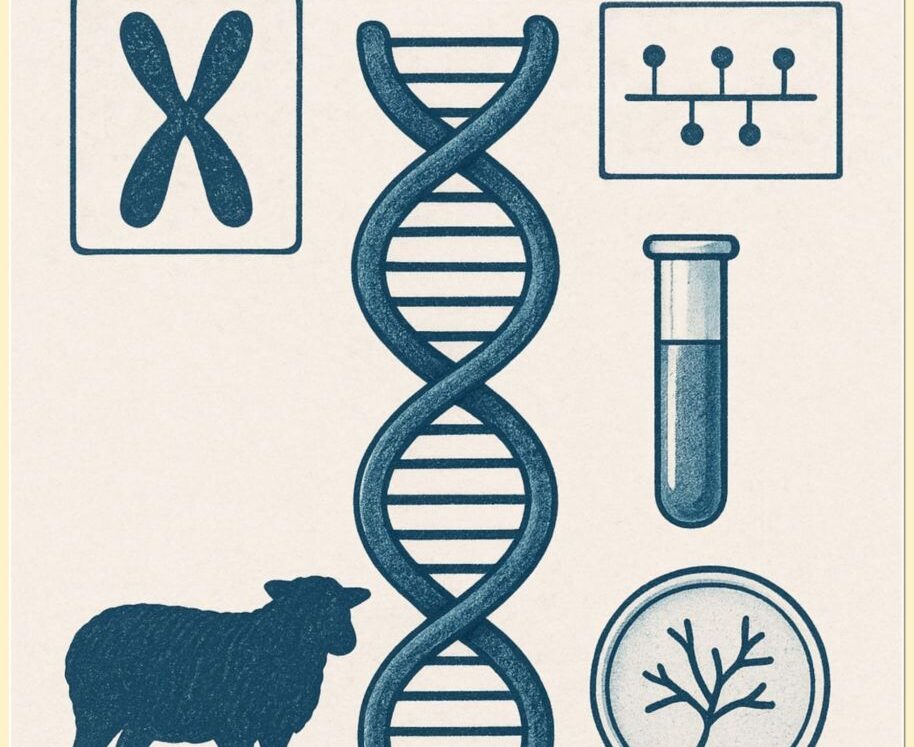
While the teaching was going on, my husband whispered to me, “That’s epigenetics.” I had never connected this passage with science until that moment. Since science often uncovers principles that align with wisdom found in Scripture, we might as well explore the possibility that Jacob’s method was a kind of ancient “science.”
Epigenetics
Epigenetics is a broad topic in genetics. Science tells us that human beings are made of cells; cells form tissues, tissues form organs, and organs form systems. Simply put, life begins when a sperm fertilizes an ovum, resulting in a pregnancy that develops into a baby over nine months. That baby’s traits — whether male or female, healthy or sickly, tall or short, dark-skinned or fair-skinned — depend on the genetic material from the parents.
Genes carry hereditary information that defines us scientifically and genetically. However, the science of epigenetics shows how our environment and certain behaviors can influence how these genes are expressed. In other words, environmental factors can “switch on” or “switch off” certain genes without altering the underlying DNA code. Was Jacob the First Genetic Engineering?
This ancient method raises an intriguing question: How could merely looking at a peeled branch affect the reproductive outcome of animals? Could visual stimuli somehow influence biological processes at the genetic level? One thought that came to my mind is the principle of electromagnetic radiation — certain wavelengths of light are invisible to the naked eye, yet still have powerful effects. Perhaps this is an area worth exploring further in molecular genetics, agriculture, and even physics.
God’s Intervention
Regardless, in Genesis 30, God must have inspired Jacob’s wisdom. But then, in Genesis 31, Laban tightened up the rule of the game, which affected the specificity of the Jacob method. Laban kept changing Jacob’s wages. Whenever Laban saw that more sheep were being born with speckles, he would switch the agreement so that speckled animals belonged to him, leaving spotted ones for Jacob — and vice versa. This would have naturally limited Jacob’s ability to gain wealth through any method he used.
But God stepped in. According to Jacob’s own testimony on God’s given revelations, God caused rams with the desired markings to mate with the flock at just the right time, ensuring that the offspring favored Jacob. It took divine intervention to turn the tables on Laban’s deception.
Lessons We Can Learn
1. God sees injustice, even when others think they’re getting away with it. Laban’s continual scheming didn’t escape God’s notice. The Lord knows when we are being treated unfairly, and in His timing, He acts.
2. Skill and wisdom are valuable, but God’s blessing is essential. Jacob used his knowledge and ingenuity, but it was ultimately God’s hand that brought increase. Human strategies, without God’s favor, have limits.
3. Deception often meets its match. Laban’s trickery was met by Jacob’s resourcefulness and, more importantly, God’s justice. People who live by manipulation may eventually face the consequences of their actions.
4. God can prosper you in hostile environments. Jacob’s wealth grew not in a fair workplace but in the middle of constant exploitation — proof that no human opposition can block God’s provision.
5. Don’t fight only in the physical; trust God’s higher intervention. Jacob didn’t engage in open conflict with Laban over wages; instead, he worked faithfully and allowed God to vindicate him.










#Comment
Sandi
This was good to hear. Thank you.