


The Icefield and the Infinite

As the name suggests, an icefield is a vast expanse of frozen wonder nestled among towering mountains. For centuries, these icy giants have stood firm—weathering summer heat, autumn rains, and winter storms. They are silent witnesses to time, untouched by haste.
Among the many icefields across the globe, some of the most significant lie in North America, South America, Europe, Asia, Antarctica (home to the world’s largest ice mass), and Greenland. Surprisingly, some icefields are also found in Africa, such as those on Mount Kilimanjaro and the Rwenzori Mountains. Though Africa is largely temperate, these high-altitude icefields persist—but they too are shrinking under the weight of changing weather patterns.


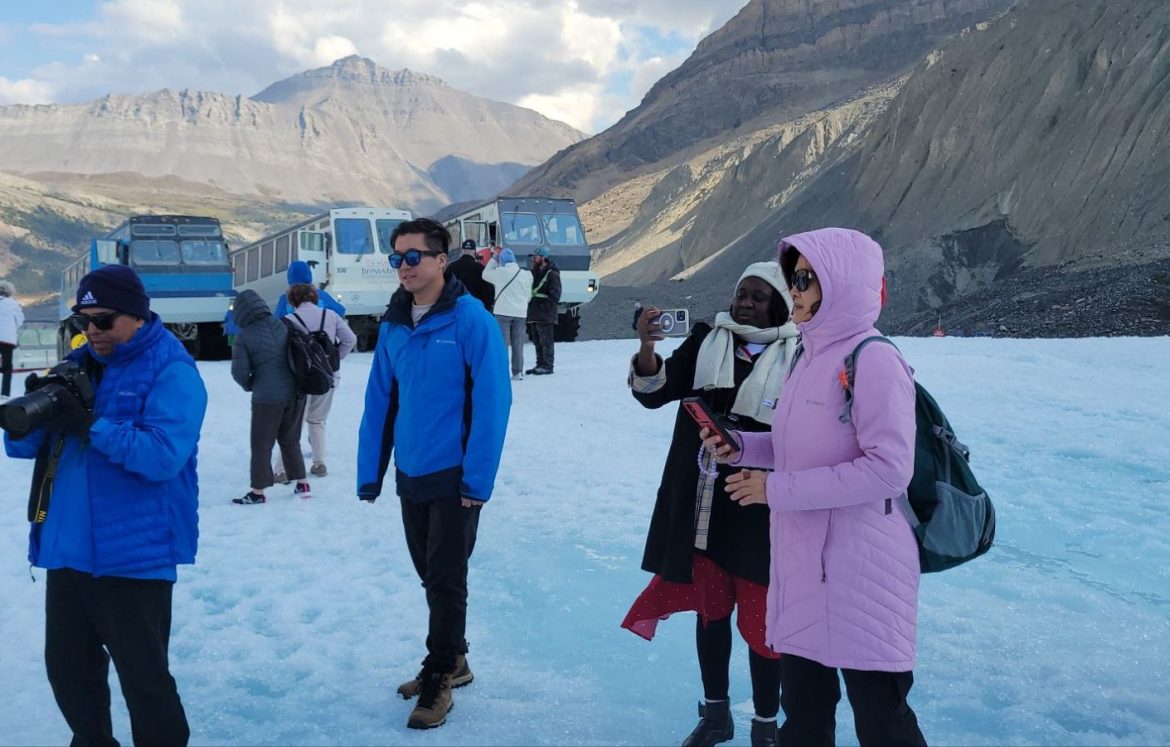
Yet a few icefields stand out in fame and majesty: the Columbia Icefield in Canada (as seen in the pictures), the Southern Patagonian Icefield in Chile and Argentina, and the Juneau Icefield in Alaska and British Columbia.

With the dramatic shifts in climate—especially global warming—these icefields continue to melt. Visiting the Columbia Icefield in Banff was a profound experience. We boarded a massive “ice explorer” bus, its tires towering like shields. It climbed the steep mountain like it created it and icy slope with authority, like a determined beast gripping the earth firmly with every step. On the descent, it moved with careful precision, almost like a centipede gliding down a glass wall. When the driver paused midway on the sleepy mountain road, I believe many hearts whispered quiet prayers.


It’s said that drinking from the icefield’s waters can make you look sixteen again. Visitors came with water bottles, and some lay flat on the ice to drink directly. Some people didn’t just sip—they soaked their faces in it. I think my husband is transforming quietly after drinking from the icefield spring of transforming water, lol!
This icefield feeds several glaciers including Athabasca Glacier. Although it is receding, it was still massive and glorious to behold. Walking kilometers into it and climbing hills to get to the centre and top of the Athabasca glacier was amazing. The wind over there was so real, powerful and inspirational. I wholeheartedly recommend the visit.
But beyond the beauty and thrill, I couldn’t stop thinking about the magnificent power of God—the mountains, the icefield, the depth, the cool air, the singing winds. Humanity tries to study these wonders, yet the very subjects of their study continue to outpace them. No wonder the Word of God declares:
“Oh, the depth of the riches both of the wisdom and knowledge of God! How unsearchable are His judgments and His ways past finding out!” — Romans 11:33
Let’s reflect:Were the oceans created for humans?Were the mountains, the icefields, the planets formed for our sake?No.
So when we feel tempted to question God or speak against Him, let us remember: creation and the power behind it are not our companions—they are far too vast, too holy, too powerful. We are but one entity among infinite wonders.
For by him all things were created, in heaven and on earth, visible and invisible, whether thrones or dominions or rulers or authorities—all things were created through him and for him.”
– Colossians 1:16
If God has favored us—granting knowledge and wisdom to understand even a fraction of life—we must not let pride swell our heads. Instead, let us recognize our limits, appreciate His love, and reverence the power of God revealed all around us.


“Oh, the depth of the riches both of the wisdom and knowledge of God! How unsearchable are His judgments and His ways past finding out!”
– Romans 11:33